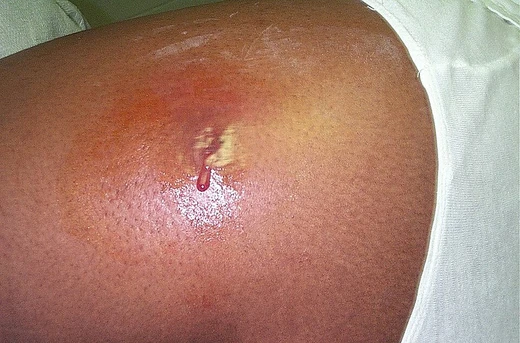
Leprosy
A curable neglected tropical disease with ancient roots and persistent stigma.

Leprosy, also known as Hansen's disease (HD), is a long-term infection caused by the bacterium Mycobacterium leprae or Mycobacterium lepromatosis. It primarily affects the nerves, respiratory tract, skin, and eyes, and has been known to humanity for thousands of years, historically associated with significant social stigma.
- caused_by
- Mycobacterium leprae or Mycobacterium lepromatosis
- transmission
- Close contact, likely through cough or nasal fluid; not sexually transmitted or spread during pregnancy
- incubation_period
- Average 5 years; symptoms may begin within 1 year or take 20 years or more
- global_cases_1980s
- 5.2 million
- cure_rate_1994_to_2014
- 16 million people cured worldwide
- treatment
- Multidrug therapy (dapsone, rifampicin, clofazimine) for 6 or 12 months, provided free by WHO
Lore & Background
Leprosy has affected humanity for thousands of years. The disease takes its name from the Greek word λέπρα (lépra), from λεπίς (lepís; 'scale'), while the term 'Hansen's disease' is named after the Norwegian physician Gerhard Armauer Hansen. The study of leprosy and its treatment is known as leprology. Most new cases occur in one of 14 countries, with India accounting for more than half of all new cases.
Reader's Guide
Leprosy is significant as a long-standing human disease that is now curable with multidrug therapy, yet it continues to carry a heavy social stigma that hinders self-reporting and early treatment. The disease is classified as a neglected tropical disease. Its transmission requires extensive contact, and 95% of exposed individuals do not develop the disease. The discovery that armadillos can transmit leprosy to humans makes it a zoonotic disease. The disease's legacy includes its role in medieval Europe, possibly linked to the red squirrel fur trade, and its ongoing impact in poverty-stricken regions.
Did You Know?
- Leprosy is not highly contagious; 95% of people exposed to M. leprae do not develop the disease.
- Armadillos can transmit leprosy to humans, making it a zoonotic disease.
- Treatment for leprosy is provided free of charge by the World Health Organization.
More in Infectious Diseases 1-24
Elsewhere in the Infectious Diseases universe
Spotted an error? Know more?
This is a living reference — every entry is fact-audited, and reader corrections feed straight into our audit queue. Suggest an edit · See this site's audit record