Lyme disease
Tick-borne bacterial infection common in the Northern Hemisphere.

Lyme disease, also known as Lyme borreliosis, is a tick-borne disease caused by species of Borrelia bacteria, transmitted by blood-feeding ticks in the genus Ixodes. It is the most common disease spread by ticks in the Northern Hemisphere, with infections most common in the spring and early summer. The disease is treatable with antibiotics, and most treated patients experience a full recovery, though some may have long-term effects.
- caused_by
- Borrelia bacteria
- transmitted_by
- Ixodes ticks
- most_common_sign
- Erythema migrans rash
- incubation_period
- Usually 1–2 weeks
- treatment
- Antibiotics (e.g., doxycycline, amoxicillin, cefuroxime)
- prevalence
- Most common tick-borne disease in the Northern Hemisphere
Lore & Background
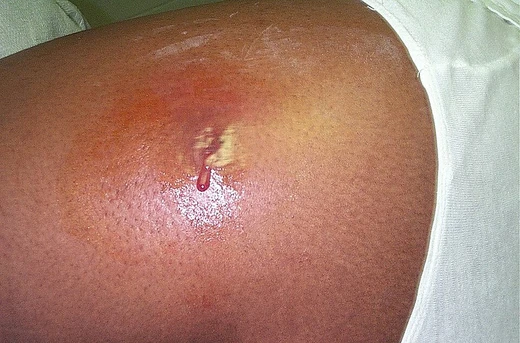
Lyme disease can produce a broad range of symptoms. The incubation period is usually one to two weeks, but can be much shorter or longer. Symptoms most often occur from May to September in the Northern Hemisphere because the nymphal stage of the tick is responsible for most cases. Approximately 80% of Lyme infections begin with a rash at the site of a tick bite, often near skin folds. The rash, termed erythema migrans, is usually circular or oval, red or bluish, and may have a raised or darkened center. In Europe, about 19% of cases show a 'bull's eye' pattern, while in the United States this occurs in up to 79% of cases. The rash is typically not itchy and may be accompanied by flu-like symptoms such as fatigue, headache, body aches, fever, and chills.
Reader's Guide
Lyme disease is significant as the most common tick-borne illness in the Northern Hemisphere, with a broad range of symptoms that can affect the skin, nervous system, heart, and joints. Early detection and prompt treatment with antibiotics are associated with more favorable outcomes. If untreated, the infection can spread, leading to neurological problems such as facial palsy, meningitis, and radiculopathy, as well as heart complications like Lyme carditis. Months to years later, repeated episodes of joint pain and swelling may occur. Diagnosis is based on symptoms, history of tick exposure, and possibly antibody testing. Prevention focuses on avoiding tick bites through protective clothing and insect repellents. The legacy of Lyme disease includes ongoing research into vaccines and the recognition of post-treatment Lyme disease syndrome for patients with persistent symptoms after appropriate treatment.
Did You Know?
- Approximately 70–80% of infected people develop an expanding red rash known as erythema migrans.
- In the United States, up to 79% of cases show a 'bull's eye' rash pattern, compared to about 19% in Europe.
- Lyme carditis can cause heart palpitations, dizziness, fainting, and atrioventricular block.
The Central Medical Debate
The core disagreement surrounding chronic Lyme disease centers on whether lingering symptoms stem from a persistent Borrelia infection or from other entirely separate conditions. Major American medical bodies—the Infectious Diseases Society of America, the American Academy of Neurology, and the National Institutes of Health—have collectively stated that no convincing evidence links Borrelia to the constellation of symptoms labeled CLD. They specifically caution against prolonged antibiotic regimens, citing both ineffectiveness and potential for serious harm. On the other side, the International Lyme and Associated Diseases Society maintains that surviving B. burgdorferi organisms or co-infections with other tick-borne pathogens like Ehrlichia and Babesia may drive ongoing illness. Some clinicians also propose an autoimmune mechanism triggered by the initial infection. A review of animal studies found live but disabled spirochetes post-treatment, yet the authors emphasized none were found in inflamed tissues and criticized the studies for failing to account for how antibiotics behave differently in animals versus humans. They concluded there is no scientific basis for the hypothesis that such organisms cause post-Lyme symptoms in people.
Diagnostic Overlap and the Misdiagnosis Risk
One of the most troubling aspects of the chronic Lyme label is how its symptom profile—fatigue, muscle aches, cognitive difficulty, joint pain—overlaps so broadly with numerous other conditions that it becomes nearly impossible to use as a standalone diagnosis. Harriet Hall, reviewing a long list of attributed symptoms, observed that the checklist pretty much covers everyone. A study using an ILADS-based symptom questionnaire confirmed it could not meaningfully separate people with possible post-Lyme complaints from those suffering from other ailments. In many cases, standard diagnostic tests for Borrelia infection come back negative, and the symptoms are more consistent with fibromyalgia or myalgic encephalomyelitis. The misdiagnosis risk is not merely academic: documented cases show that cancer, a brain tumor, ALS, lupus, multiple sclerosis, thyroid disorders, and mental health conditions have all been incorrectly labeled as chronic Lyme. This means patients with serious, treatable diseases may be steered away from appropriate care while being subjected to unnecessary and potentially dangerous interventions.
Treatment Harms and the Antibiotic Question
The most controversial and potentially dangerous treatment promoted for chronic Lyme disease is prolonged antibiotic therapy, particularly intravenous regimens. Randomized placebo-controlled trials have demonstrated that extended antibiotics provide no sustained benefit to people with CLD, while simultaneously producing significant adverse effects and measurable placebo responses. Recognized medical authorities uniformly advise against long-term antibiotic treatment, even when some symptoms persist after successful initial therapy. The risks are not theoretical: CDC scientists documented life-threatening complications arising from unnecessary intravenous antibiotics and immunoglobulin infusions. An adolescent girl and a woman were hospitalized with septic shock, and the woman ultimately died. Other patients developed Staphylococcus aureus infections and intractable Clostridioides difficile. Prolonged antibiotic use carries well-known risks of resistance, organ damage, and severe allergic reactions. Meanwhile, fibromyalgia—which can be triggered by an initial infection and persist long after the pathogen is gone—does not respond to antibiotics at all, making such regimens both ineffective and hazardous for the large subset of CLD patients whose underlying condition is fibromyalgia.
Legal Protections and Institutional Pushback
In the United States, a subculture of physicians who identify as Lyme literate has engaged in a remarkable institutional campaign. After facing disciplinary action from state medical licensing boards for departing from evidence-based practice, these doctors successfully lobbied state legislatures for specific legal protections that exempt them from the standard of care and from science-based treatment guidelines. Critics have described this process as legislative alchemy, a term for the phenomenon whereby pseudomedical practices are elevated to legal status through political channels rather than scientific validation. Some physicians and medical ethicists view the broader promotion of chronic Lyme disease as a form of health fraud, particularly given the absence of objective evidence for persistent infection in many diagnosed patients. The tension between this legally shielded subculture and mainstream infectious disease and neurology societies has created a fractured landscape in which patients may receive radically different advice depending on which clinician they consult, complicating an already difficult diagnostic and treatment pathway.
Frequently Asked Questions
Who is Lyme disease?
Lyme disease is a bacterial infection that enters the body when an Ixodes tick, harboring Borrelia species, takes a blood meal. It holds the title of the most frequently encountered tick-transmitted illness across the Northern Hemisphere.
What are Lyme disease's powers/role?
Its signature move is the erythema migrans rash, a distinctive expanding red mark that typically appears at the bite site. If the infection is left unaddressed, it can also target joints, the nervous system, and the heart.
How does Lyme disease's story end?
The standard resolution is a course of antibiotics such as doxycycline, amoxicillin, or cefuroxime, which clears the Borrelia infection in the vast majority of cases. A small number of patients, however, report persistent symptoms even after successful treatment.
Why is Lyme disease important?
As the leading tick-borne illness in the Northern Hemisphere, it shapes public-health messaging and outdoor-safety guidance every year. Its peak transmission window in spring and early summer makes it a recurring seasonal concern for hikers, gardeners, and outdoor workers.
What is Lyme disease's origin and timeline?
The infection is seeded by Borrelia bacteria delivered during a feeding episode from an Ixodes tick. After an incubation window of roughly one to two weeks, the first visible symptoms typically surface in the patient.
More in Infectious Diseases 25-30
Elsewhere in the Infectious Diseases universe
Spotted an error? Know more?
This is a living reference — every entry is fact-audited, and reader corrections feed straight into our audit queue. Suggest an edit · See this site's audit record